
When Calm Leaves the Classroom
How Kind Mind helps children carry regulation skills with them
The clearest sign that a child has learned a skill is not always what they do when a teacher asks.
Sometimes it is what they do later.
In the dramatic play area. On the bus. At home. Over the summer. In a moment of disappointment, frustration, sadness, or uncertainty, when no one is standing beside them saying, “Let’s take a breath.”
At Promise Early Education Center in Lewiston and Auburn, Maine, teachers are seeing Kind Mind practices begin to travel beyond the lesson itself. Children are using breathing, calming strategies, affirmations, and emotional language in ways that show they are not simply following directions. They are beginning to own the tools.
Molly, a pre-K teacher at Promise, sees it in the small, spontaneous moments that happen during play. A child will be in the dramatic play area holding a baby doll. The baby doll is crying. And without prompting, the child will comfort the doll with language they have heard and practiced in the classroom: “That’s okay. We can take a deep breath.”
For Molly, those are the moments that matter. Children check on one another. They ask, “Are you okay?” They suggest tools. They use the language of calm and care with each other, not because an adult told them to, but because it has become part of the classroom culture.
Rebecca Sosney, a longtime early childhood educator and Promise teacher, has seen the same kind of carryover beyond pre-K.
In her classroom, children used “Love Monsters” as comfort objects. When children needed an extra hug, they could go to their cubby and hold their Love Monster. At the end of the year, they took them home.
One former student, now in first grade, lost his Love Monster over the summer. His mother reached out to Rebecca because he was upset. But she also shared something powerful: he remembered to take deep breaths. He calmed himself. And he reminded himself that even though the Love Monster was gone, the love was not.
That moment showed Rebecca that the skill had stayed with him.
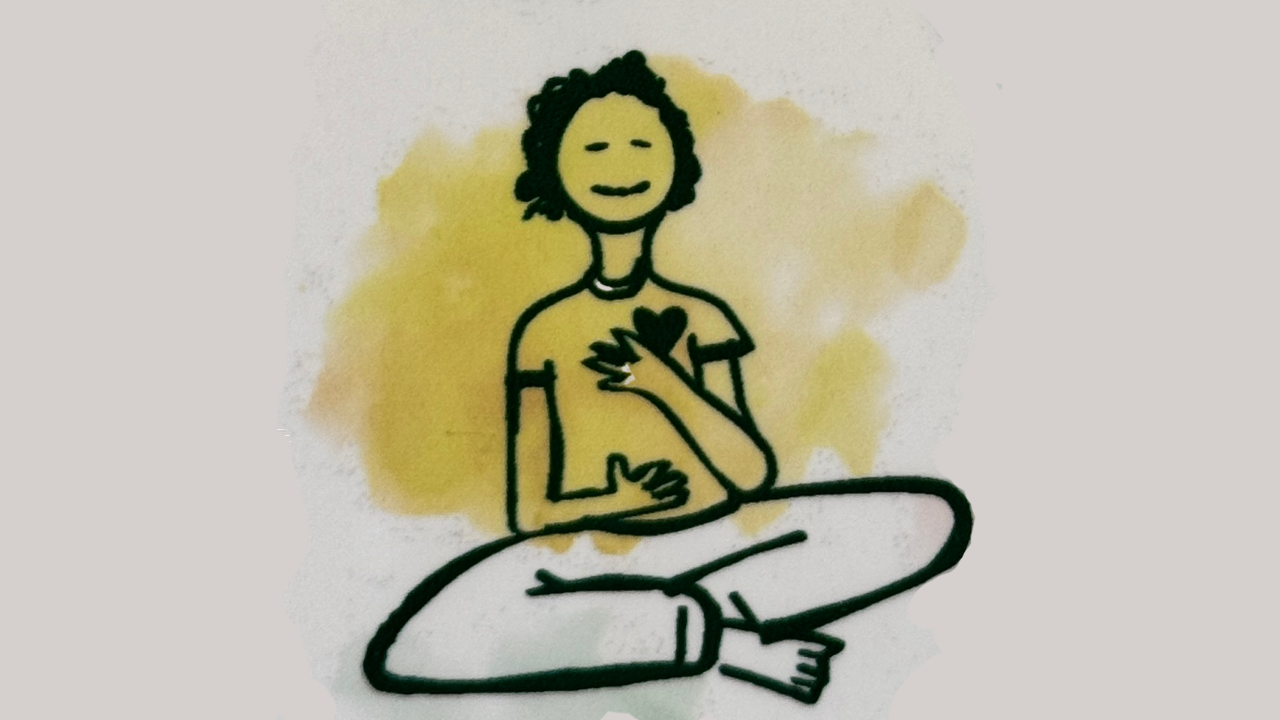
Kind Mind practices may look simple from the outside: five deep breaths, a calming audio practice, a chime, an affirmation, a quiet moment with hands on heart or belly. But inside a young child, those practices can become something much bigger.
They become a way to pause.
A way to notice what is happening in the body.
A way to ask for help.
A way to move through disappointment without becoming overwhelmed by it.
A way to remember, even when something is missing, that love and calm are still available inside.
At Promise Early Education Center, that is the deeper promise of social-emotional learning. Children are not only learning how to behave in a classroom. They are learning how to understand themselves, care for others, and carry calming strategies into the next moment, the next grade, and the next hard thing.
When calm leaves the classroom, it becomes a life skill.
Author