
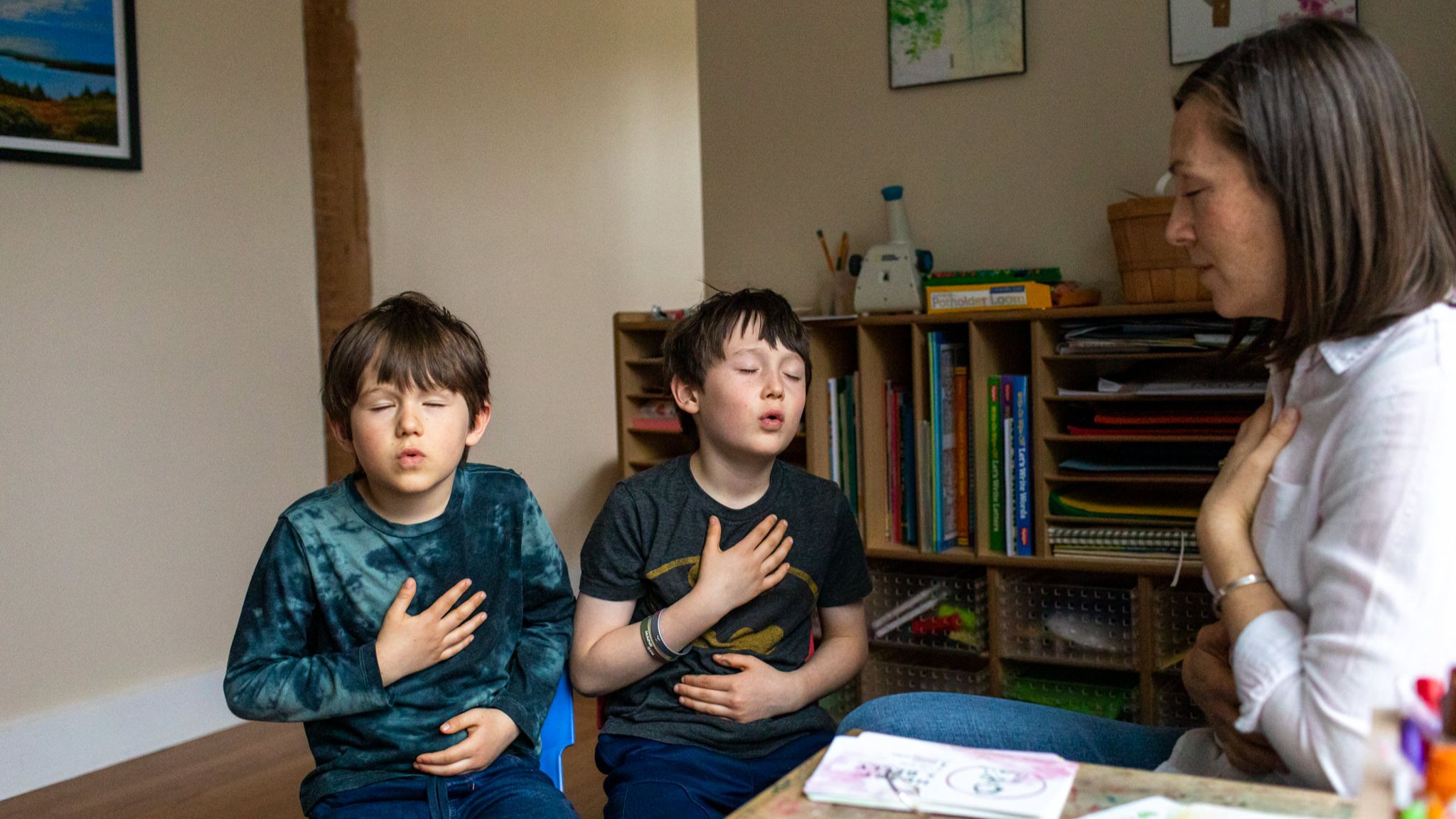
From Classroom to Home: A Shared Language for Calm and Connection
How Kind Mind helps children thrive when the adults in their world are using the same tools, language, and supportive practices
As the school year comes to a close, children are often moving from the steady rhythm of the classroom into the looser, less predictable days of summer.
For some children, that freedom feels exciting. For others, the change in routine can bring big feelings, harder transitions, disrupted sleep, or more moments of overwhelm. And for families, summer can mean juggling camps, caregivers, travel, screen time, sibling dynamics, and long days that don’t always go as planned. That’s why shared language matters.
When children hear the same supportive words and practice the same regulation tools across school, home, camp, and community settings, they begin to internalize those skills. Over time, the tools are no longer something an adult “does” for them. They become part of how children learn to notice their bodies, name their emotions, ask for support, and return to connection.
Regulation doesn’t stop at the classroom door
Kind Mind is designed to fit into the rhythm of real classrooms, but the practices are not just for school. The same simple tools that help children transition from circle time to lunch can also help during bedtime, car rides, family gatherings, camp drop-off, or a long travel day.
This is especially important during summer, when structure can vary from day to day. Children may not always have the same schedule, but they can still have familiar anchors.
A few Kind Mind tools that travel well:
- Body Scan: This gentle practice helps children notice their bodies, release tension, and settle into rest. It can be especially helpful before naps, bedtime, or quiet time after a full, active day.
- Weekly Connections Calendar: Small moments of connection build resilience. A simple prompt at breakfast, in the car, around the dinner table, or during a walk can help children feel seen, heard, and emotionally held.
- Heartfelt Emotions: Emotional awareness grows when adults and children have language for what they are feeling. This tool helps children recognize emotions without shame and gives adults a compassionate way to support regulation instead of rushing to fix or dismiss the feeling.
Calm is built through connection
Kind Mind’s approach is rooted in co-regulation: the understanding that children learn regulation through connected, steady adults. A child who is melting down does not need a lecture first. They need safety, presence, and support. That does not mean there are no boundaries. It means connection comes first so boundaries can be received.
A few simple summer phrases families can practice:
“I see you’re having a big feeling.”
“Let’s take one breath together.”
“Where do you feel that in your body?”
“You are safe. I’m here with you.”
“Let’s pause and try again.”
These small shifts help children understand that emotions are not problems to hide. They are signals to notice, name, and move through.
Author