
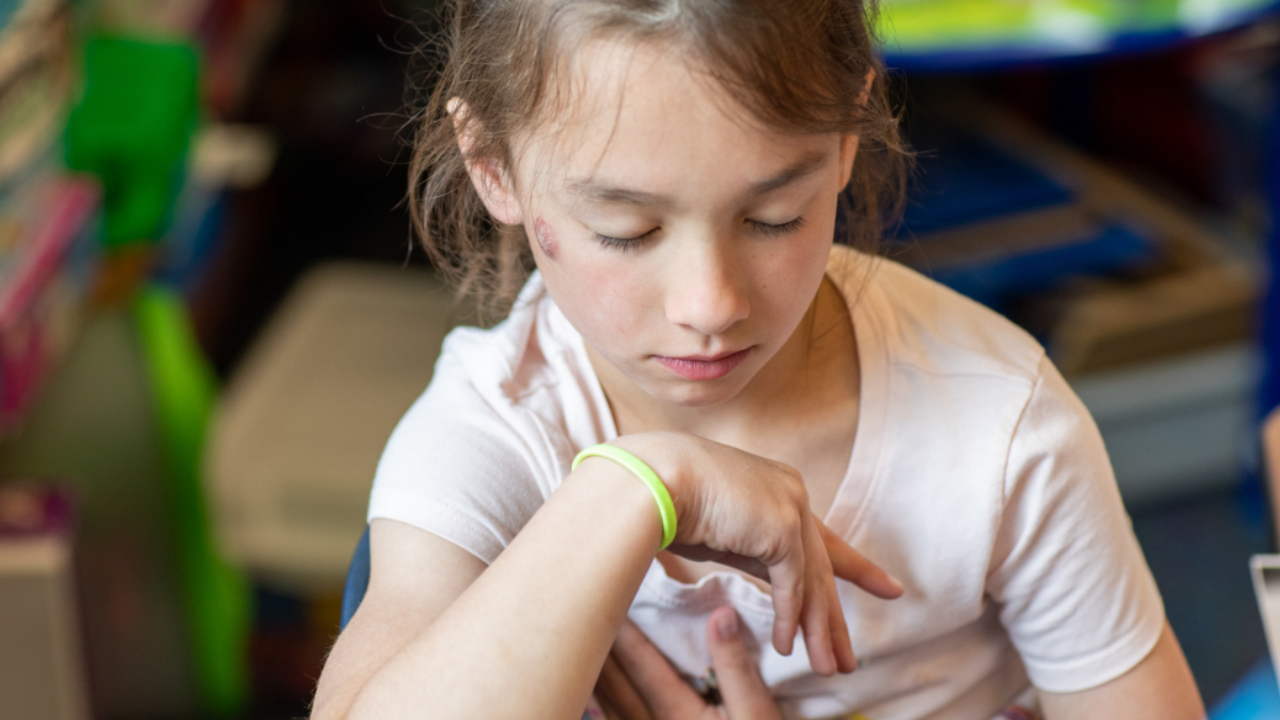
Heart-Centered Practices: Building Compassion and Resilience in Students
There is profound power in physically connecting with our hearts. Our hearts are strong, resilient organs that feel and process emotions in ways our minds cannot fully comprehend. What if we stepped back from trying to process emotions in the "correct way" and instead trusted our hearts' innate wisdom, simply feeling them beat in our chests, knowing they're designed to care for us.
The Science of Heart Connection
Touch is essential to overall health and wellbeing; this has been extensively researched and documented. The Greater Goods Science Center published research explaining how physical touch signals safety and security in the brain while activating the vagus nerve, which connects directly to our capacity for compassionate responses. When students physically connect with their own hearts, they're accessing a powerful tool for self-regulation and empathy development.
Benefits of Heart Connection for Students
In classroom settings, practicing heart connection at least twice per session yields profound benefits for students' social-emotional learning and resilience building. This physical connection cultivates self-compassion and empathy toward others while evoking awe for the body's remarkable capabilities. It generates gratitude for something universal we all share and creates moments of mindfulness that soothe the nervous system. Perhaps most importantly, it reminds students of our common humanity, and that we all have beating hearts, making us fundamentally connected across all our differences.
This week's classroom practice
Personal Practice for Educators:
- Find at least two moments daily to place your hands on your heart
- Stay present with this connection for at least 30 seconds
- Remind yourself that all humans share this experience; in this way, we're all the same
Suggested times:
- First thing in the morning before starting your day
- After physical activity when your heart is working vigorously
- During big emotions (nervousness before a difficult conversation, excitement, frustration, anxiety)
- Before sleep as you wind down from your teaching day
To find presence during these moments, close your eyes and feel your heartbeat. Bring a sense of wonder and gratitude to this remarkable organ that works tirelessly for you.
In Your Classroom
Dedicate one minute daily for students to quietly place hands on their hearts. Establish a consistent time so it becomes routine; perhaps during morning circle, after recess, before transitions, or at the end of the day. Remind students this is something all humans share and that it connects us across all differences. For younger students in Pre-K through 2nd grade, incorporate gentle movement beforehand to activate a stronger, more noticeable heartbeat that they can easily feel.
Model heart connection when you experience strong emotions in the classroom. Invite students to feel their hearts during emotional situations, bringing self-compassion and allowing their bodies to guide emotional processing naturally. Frame this as a tool they can use independently whenever needed, not just during structured practice times.
Consider pairing heart connection with transition times to support emotional regulation throughout the day. Use it before assessments to calm nervous systems, incorporate it after conflict resolution as a reconnection practice, or combine it with breathing exercises for deeper nervous system regulation.
This practice is beautifully simple: throughout your teaching day and in your classroom, create moments to place hands on hearts and feel them beating. This small act carries extraordinary power for building the compassionate, resilient learning communities our students need.
Author