Growing Minds Builds Calm, Consistent Days with Kind Mind
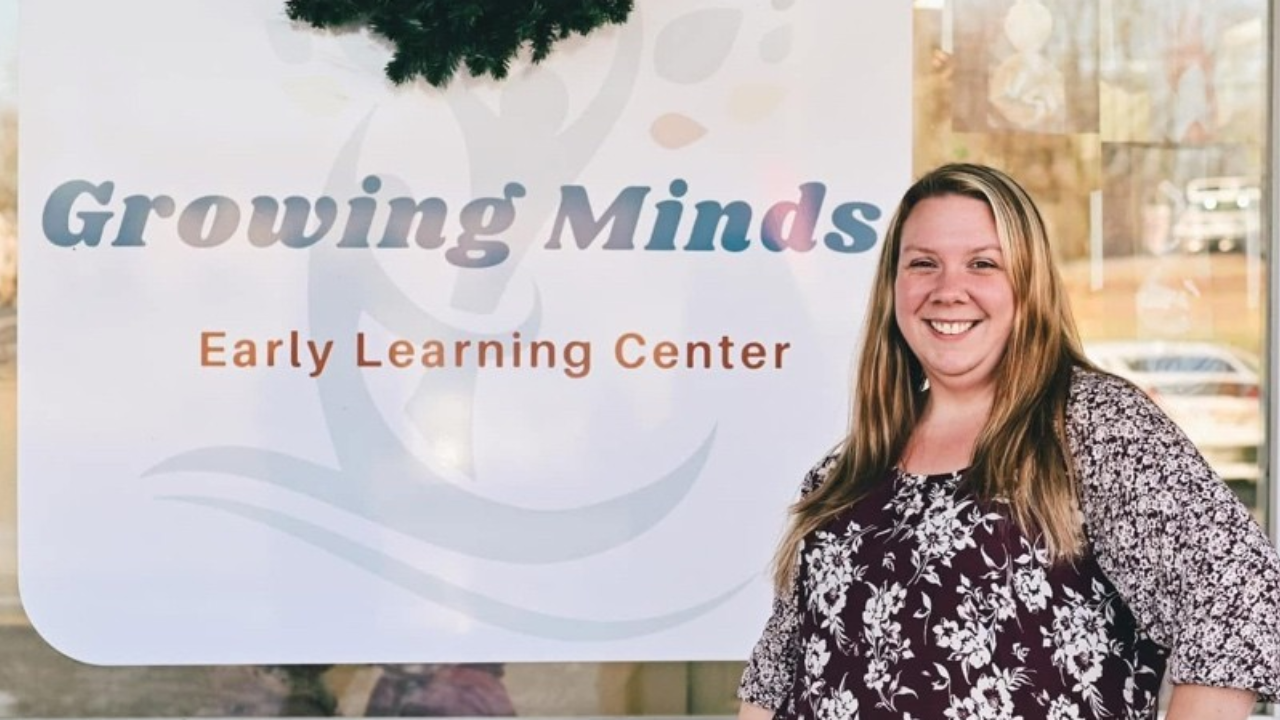
At Growing Minds Early Learning Center in Bangor, Maine, Kind Mind isn’t a “special lesson.” It’s part of the day, especially in hard moments: transitions, structured activities, and the in-between times where waiting, sharing, and frustration can spiral. Licensed for 75 children (six weeks–5 years), Growing Minds has nearly full enrollment and a 30-person team across six classrooms.
When Director Melissa Holt opened the center in September 2022, she brought 17 years of childcare experience with her. But like many directors, she saw a new challenge emerging. “We were struggling with the social and emotional development of our oldest kiddos,” she said. These were children who were babies or young toddlers during the COVID pandemic, when routines and consistency shifted for many families. “I feel like inadvertently the kiddos paid the price, and we’re making up for lost time.”
That’s what drew Holt to Kind Mind. “All of what Kind Mind is touches on our area of need,” she said — especially because it can be used “from infancy all the way through our oldest classrooms.” Her hope: consistent cues and shared routines will support children year after year — starting early and building from room to room as they grow.
Since adopting Kind Mind centerwide in September, Melissa has focused first on just that — consistency, because it creates the biggest shifts. “All classrooms are using the same welcoming songs, transition songs, and things like that. That piece is universal across all of our rooms,” she shared. From there, the team has begun layering in select tools—like guided meditations—with older children.
Melissa’s biggest takeaway for other directors is refreshingly practical: Kind Mind has a lot of depth, and that’s a good thing — but it also means the rollout works best when teams can absorb it in phases. “Buy yourself some time, and dive into it before implementation.” Her encouragement is to explore “the nooks and crannies of the app, website, and modules,” then choose what will help your team succeed right now — and build from there.
-
Transitions, clearly cued: “We use timers to get attention, then the rain stick indicates a transition.”
-
Music, used on purpose: No longer a background filler, “music is being played intentionally.” “As soon as the children hear the tune, they stop. They’re intrigued.”
-
Hands-on-heart breathing (even at home): In classrooms that practice it daily, children start using it on their own. Melissa has seen it with her one-year-old daughter: “Her hand goes right on her heart and she’ll just start taking deep breaths.”
-
Breathing buddies kids love: “The breathing buddies—little frogs—the kids love. “They put them on their chest and feel them rise up and down.”
Underneath these small routines is a bigger belief. Melissa is “a firm believer” that early education is fundamentally social and emotional — the foundation that makes everything else possible. “If kiddos can regulate themselves and go off to kindergarten, I feel way more accomplished in that than knowing that they know their ABCs,” she said. And the goal goes far beyond the classroom: “You can take Kind Mind and its practices and implement them into any part of your life and be able to thrive.”
Author