
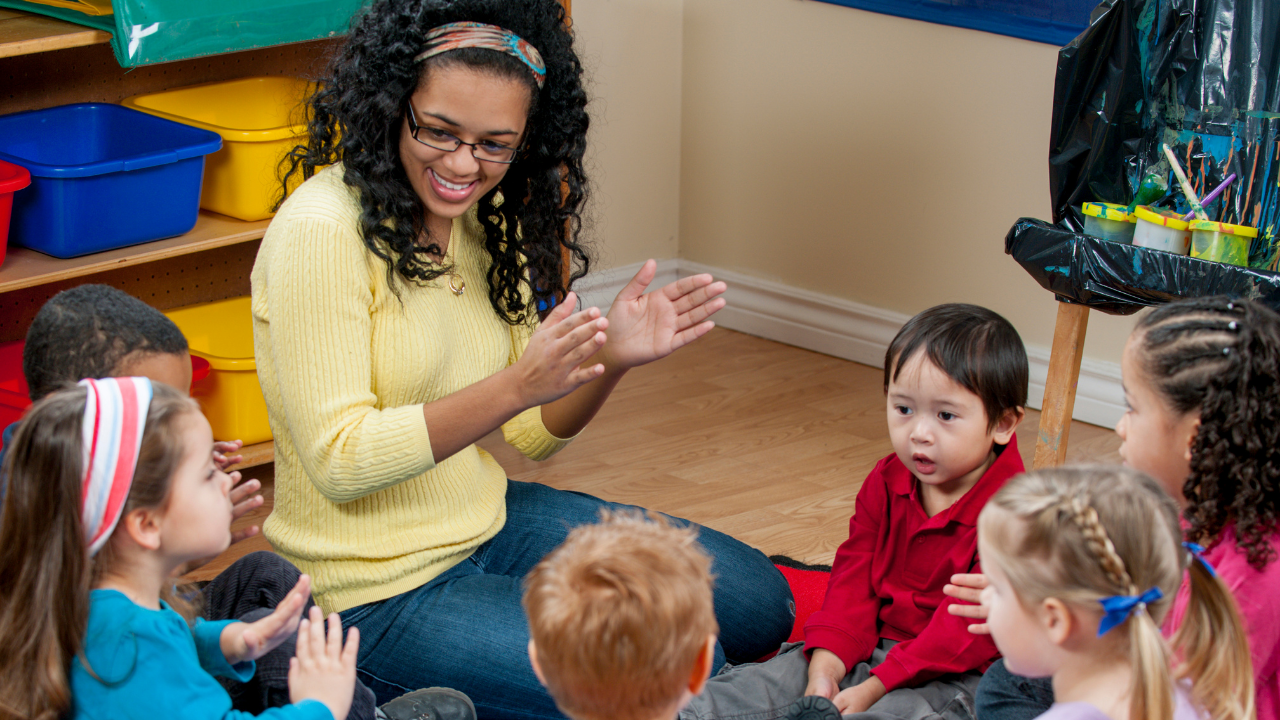
Sing, Move, Read: Music as a Bridge to Early Literacy
Each September, National Literacy Month puts a spotlight on the importance of reading and the skills that help children become readers. But early literacy begins long before a child opens a book or recognizes a word on a page.
It begins with listening. With hearing and playing with sounds. With learning new words, recognizing patterns, taking turns, and being able to focus and engage.
Music brings many of these building blocks together.
Music Builds Language—and Readiness to Learn
Songs naturally invite children to notice rhythm, rhyme, repetition, syllables, and the different sounds within words. Research has connected early music experiences with language and literacy development, particularly phonological awareness, vocabulary, communication, and turn-taking.
Music can also help create the conditions children need for learning. When a familiar song marks the beginning of story time or guides children through a transition, it offers a predictable cue: This is what’s happening now. I know what comes next.
Singing together gives children something shared to focus on, invites them to participate, and can help them shift from a difficult or overstimulating moment into one where they are better able to listen and engage.
That is why music is not an add-on in Kind Mind. It is intentionally woven throughout the program to support regulation, connection, transitions, and learning.
Music, Used on Purpose
At Growing Minds Early Learning Center in Bangor, Maine, Kind Mind is not treated as a separate lesson. It is part of the everyday rhythm of the center—including the moments when children are arriving, transitioning, waiting, sharing, or working through frustration.
“All classrooms are using the same welcoming songs, transition songs, and things like that,” shared Melissa Holt of Growing Minds. “That piece is universal across all of our rooms.”
That consistency matters. Children hear familiar musical cues throughout the center, and educators have a shared tool they can use across classrooms.
“Music is being played intentionally,” Melissa explained. “As soon as the children hear the tune, they stop. They’re intrigued.”
Instead of becoming background noise, music becomes a purposeful way to capture attention, create connection, and prepare children for what comes next—including reading and learning.
Three Ways to Bring Music Into Literacy
1. Play with the sounds in words
Choose words from a book and explore how they sound. Clap the syllables in character names, make a rhyme chain, or repeat a beginning sound together: Silly snakes slither slowly.
Children do not need to know letters yet to begin hearing that words are made of smaller sounds—an important foundation for later reading.
2. Sing the story
Pair a book with a song connected to its subject. Reading about animals, weather, feelings, transportation, or body parts? Find a familiar song that uses the same ideas and vocabulary.
You can also create a new verse to a song children already know, using a character, action, or repeated phrase from the story. The tune does not need to be original—or perfect. Familiarity and participation are what matter.
3. Move the meaning
Add gestures and movement to new vocabulary. Stomp, stretch, tiptoe, wiggle, reach above, crouch below, or use scarves to explore words such as fast, slow, high, and low.
Movement gives children another way to experience the meaning of a word while keeping them actively involved in the story.
Start With One Song
You do not need special equipment or a perfect singing voice. Begin with one familiar tune: a welcoming song, a transition into story time, or a playful way to explore the words in a favorite book.
During National Literacy Month, it is worth remembering that stories do not begin only on the page. They also begin in the sounds children hear, the words they sing, the movements they make, and the safe, connected moments that prepare them to learn.
Author